Exploring the Mashaer
Visit the sacred sites of Hajj — Mina, Arafat, Muzdalifah, and more — outside the pilgrimage season
Published 26 March 2025
The Mashaer — the sacred sites of Hajj — are places most Muslims have heard about their entire lives but never visited outside the context of pilgrimage. In 2025, 1.7 million Hajj pilgrims gathered here. Outside Hajj season, you'd find only a few hundred on any given day. These sites are accessible, uncrowded, and profoundly moving in their emptiness.
- Anyone who wants to understand Hajj beyond the textbook
- Visitors with a free morning who want to see Makkah's most significant sites
- Families wanting to teach children about the rituals in a calm, unhurried setting
- Transport: You'll need a car for this route. Hire a taxi for the half-day (negotiate a flat rate, typically 150-250 SAR). Avoid ride-hailing apps — the constant stopping and starting makes them impractical for this kind of route. The sites are spread across a 20 km stretch east of Makkah.
- Best time: Early morning to avoid the heat. Start by 8 AM and you'll be done before the midday sun peaks.
- What to bring: Water, sun protection, comfortable walking shoes. There are barely any shops in Mashaer outside of the Hajj season. The only thing you'll find is a caravan of ice cream vans outside Jabal Rahma.
- Duration: 2-3 hours depending on how long you spend at each of the 7 stops. Don't rush — the emptiness of these places is part of the experience.
- Cost: Free to visit all sites. Only cost is transport.
Mina
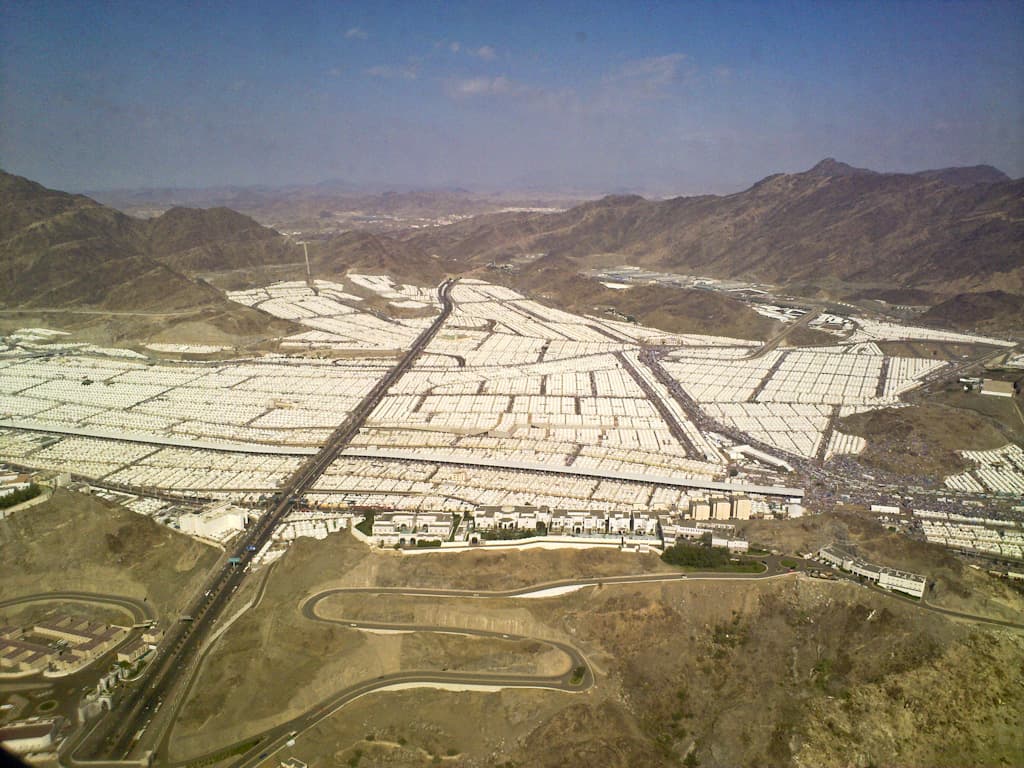
Drive through the vast tent city of Mina — over 100,000 air-conditioned tents spread across the valley. Outside Hajj season, the area is largely empty, giving you a sense of the staggering scale of the infrastructure built to house millions. Mina is fully accessible by car outside of Hajj season, and your driver can pull off the main road for photo stops.
Mina Valley
Masjid Al Khayf
One of the most historically significant mosques in Mina. The Prophet ﷺ prayed here, and it is said that seventy prophets before him also prayed at this site. The mosque sits at the foot of a mountain and is a place of deep spiritual weight. Note: Masjid Al Khayf is only open during Hajj season - outside of Hajj, the exterior and surrounding area are still worth seeing from the road.
Mina Valley
Jamarat Bridge
The multi-level bridge where pilgrims perform the stoning ritual during the days of Tashreeq. The structure is designed to handle over 300,000 pilgrims per hour. Note: the Jamarat Bridge is only open during Hajj season - outside Hajj, you'll see the structure from the road but cannot enter.
Mina
Masjid Al Bayah
The site where the Ansar of Madinah pledged allegiance to the Prophet ﷺ — the historic Bay'at al-Aqabah that paved the way for the Hijrah. A small mosque marks the spot at the foot of Aqabah hill in Mina. It's a quiet, often overlooked site with enormous historical significance. Note: the mosque is currently gated from the outside and not accessible - view from the perimeter.
Mina
Masjid Namirah
One of the largest mosques in the world, Masjid Namirah sits on the plain of Arafat. The Prophet ﷺ delivered his Farewell Sermon near this site. The mosque straddles the boundary of Arafat — part inside, part outside — a deliberate architectural detail. Note: the interior is only open during Hajj season, but outside of Hajj you can visit the grounds and prayer mats are usually available outside for those who want to pray.
Plain of Arafat
Jabal Rahma (Mount of Mercy)
The granite hill where pilgrims gather on the Day of Arafat. A white pillar marks the summit. The climb is short but the views over the plain are powerful. Outside Hajj, you'll have the hill largely to yourself.
Jabal Rahma, Arafat
Muzdalifah
The open plain between Arafat and Mina where pilgrims spend the night during Hajj. The vast, flat landscape gives you a sense of what it means when millions sleep here under the open sky.
Muzdalifah