What's the Best Way to Get Around Makkah?
Makkah Bus vs Taxi vs Walking — a practical comparison
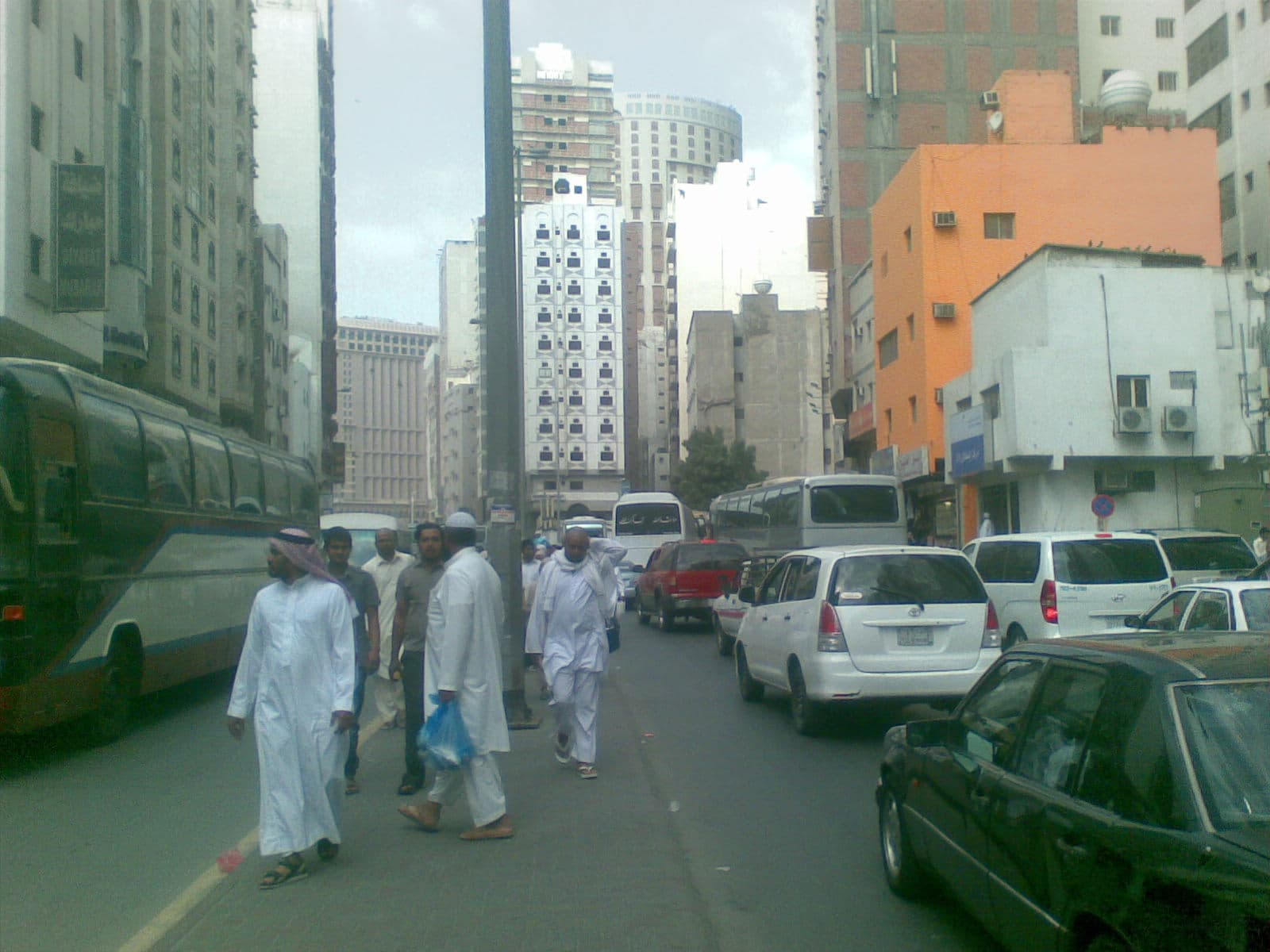
Getting around Makkah is one of those things nobody warns you about properly. The city is hilly, the traffic is unpredictable, and the roads around the Haram are a maze of closures and diversions. Here's an honest comparison of your three main options.
Walking
Best for: Trips under 1km, getting to and from the Haram, nearby restaurants.
Walking is the default for most visitors staying in central Makkah. If your hotel is within 500m of the Haram, you'll walk almost everywhere.
- Downhill to the Haram, uphill on the way back. Makkah is built in a valley surrounded by hills. The walk to the Haram is easy. The walk back after two hours of tawaf is a different story
- Pedestrian tunnels under the main roads are well-lit and save you from navigating traffic
- Covered walkways along the main approaches to the Haram provide shade — learn which route from your hotel has the most cover
- What looks like 5 minutes on a map can take 15 minutes with hills, crowds, and construction diversions
Verdict: Free, reliable, and the only option that works 24/7 without surge pricing. Just respect the hills and pace yourself.
Taxi & Ride-Hailing (Uber / Careem)
Best for: Trips over 1km, getting to sites like Jabal Noor or Jabal Thawr, restaurant runs outside the centre, airport transfers.
Careem generally has better availability in Makkah than Uber. Both work well. Metered taxis also exist but many still negotiate fares — always agree on a price before getting in.
Typical fares:
- Within central Makkah: 10-25 SAR
- To Jabal Noor: 15-20 SAR
- To Azizia area: 20-30 SAR
- To Miqaat (Masjid Aisha): 10-20 SAR
Things to know:
- Drop-off points near the Haram are restricted — your driver drops you at the nearest accessible point, not at the door
- Set your pickup location to a landmark, not a random pin. Drivers navigate better to named locations
- During Hajj and peak Ramadan, surge pricing hits hard. Budget accordingly
- Both apps accept card payment, which saves dealing with cash
Verdict: The most practical option for anything beyond walking distance. Affordable, widely available, and the only realistic way to reach outer sites.
Makkah Bus
Best for: Budget-conscious visitors, getting to the Haramain Train station, long-stay residents.
Public buses operate in Makkah on fixed routes. They're cheap (a few SAR per ride) and air-conditioned, but they come with significant caveats for visitors.
- Routes are confusing. Signage is mostly in Arabic and there's no visitor-friendly route map. Google Maps shows some routes but coverage is patchy
- Schedules are unreliable. Buses may not run to a fixed timetable, and frequency drops outside peak hours
- Stops may not be near the Haram. You'll likely still need to walk a considerable distance from the bus stop
- Crowded during peak times. Particularly during Hajj and Ramadan, buses fill up fast
Verdict: Honest answer — most Umrah visitors won't use the bus. It's a viable option if you're staying long-term and learn the routes, but for a typical trip, taxis and walking will serve you better.
Hotel Shuttles
Worth mentioning separately. Many hotels offer free shuttle services to the Haram, especially during prayer times. Ask at reception — this is often the most convenient option and saves the uphill walk back. Reliability varies by hotel.
During Hajj and Peak Ramadan
Traffic in central Makkah becomes extremely congested. Many roads close to private vehicles. Walking is often faster than driving for short distances. Plan extra time for any car journey and don't rely on ride-hailing being quick.